
Why it matters
Broken sleep leaves you tired and short-tempered during the day. In older men, walking to the toilet half-asleep in the dark is a common cause of falls. And frequent urination at night is sometimes the first sign of a prostate, bladder or general health problem that is better found early.
Three groups of causes
Doctors think of night-time urination in three groups. Many men have more than one.
- The body makes too much urine at night. Tea, coffee or alcohol in the evening; a large drink just before bed; water tablets taken late in the day; swollen ankles, where fluid that collects in the legs during the day returns to the blood when you lie down; heart problems; high blood sugar; and sleep apnoea.
- The bladder holds less or empties poorly. An enlarged prostate that blocks the flow so the bladder never fully empties, an overactive bladder, an infection or a bladder stone.
- Sleep is poor for another reason. Pain, worry or noise wakes you, and you pass urine because you are awake.
Signs the prostate may be involved
- A weak or slow stream, or one that stops and starts
- Waiting before the urine starts
- Dribbling at the end
- A feeling that the bladder is not empty
- A sudden urge that is hard to hold
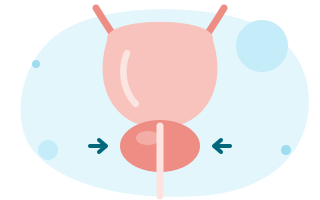
The prostate grows with age in most men. This growth (benign prostatic enlargement) is not dangerous in itself, but it can make the bladder work harder. Read more on our page on prostate treatment in Gomti Nagar Extension.
Keep a three-day bladder diary
The most useful thing you can bring to your visit is a simple diary for three days and nights:
- Each time you pass urine, write the time and measure the amount with a marked jug
- Write what and how much you drink, and when
- Note when you go to bed and when you get up
- Note any leaks or urgent rushes
If a large share of the day's urine is passed at night, the main problem is likely to be making too much urine at night, not the prostate. If you pass small amounts often, day and night, the bladder or prostate is more likely to be the cause.
What the urologist checks
- Your symptoms, drinks, medicines, sleep, snoring and general health, and your bladder diary.
- With your consent, an examination, including the prostate.
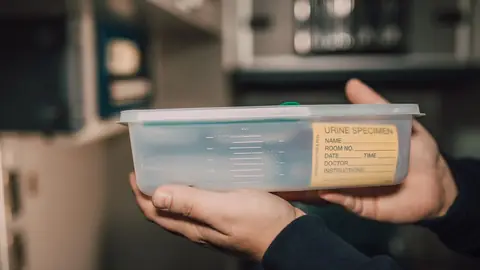
- A urine test, blood sugar and kidney function.
- A PSA blood test, after the doctor explains what it can and cannot tell you.
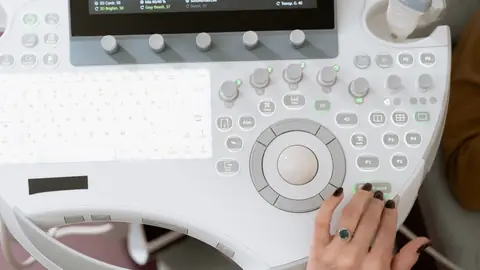
- An ultrasound to see the prostate and how much urine stays in the bladder after you pass urine, and sometimes a urine flow test.
Simple steps that often help
- Drink most of your fluids before early evening and less in the two hours before bed
- Avoid tea, coffee and colas after late afternoon, and keep alcohol low
- Ask your doctor whether water tablets can be taken in the morning instead
- If your ankles swell, raise your legs for an hour in the evening
- Pass urine just before bed, wait a minute, and try again
- Keep a night light on the way to the toilet
- Treat constipation, which presses on the bladder
Treatment options after evaluation
- Medicines for the prostate that relax the outflow or shrink the gland
- Medicines that calm an overactive bladder
- A medicine that reduces urine made at night, for selected men, with blood tests because it can lower the salt level in older people
- Treating diabetes, ankle swelling or sleep apnoea with your physician
- A prostate procedure in hospital, when medicines are not enough or the bladder does not empty
When not to wait
- You cannot pass urine at all and your lower tummy is painful and swollen: go to an emergency department
- Blood in the urine, even once
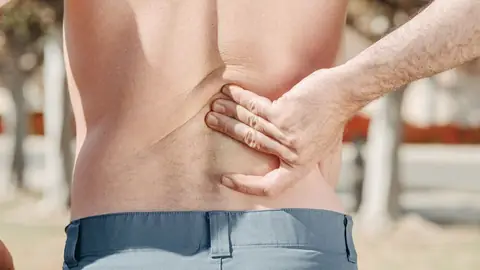
- Fever with burning urine or back pain
Night-time urination care in Gomti Nagar Extension
Swastik Urology Clinic is in Sector-5, Gomti Nagar Extension, near Sadar Tehsil, a short ride from Gomti Nagar, Shaheed Path and Chinhat. Dr. Aditya P.S. Sengar (MBBS, MS (General Surgery), DNB (Urology)) sees men with urine problems in the morning OPD, Monday to Saturday, 9:30 AM to 11:30 AM, and speaks Hindi, English, Bhojpuri and Gujarati. Bring your bladder diary, your reports and your medicines. Request an appointment.
This article gives general information and does not replace examination, diagnosis or treatment by a qualified doctor.