
Symptoms that need a urologist
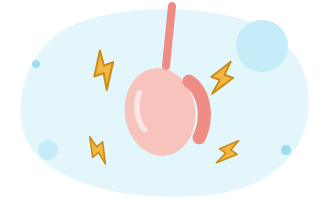
- A dull ache or heaviness in the scrotum, worse after standing, exercise or a long day
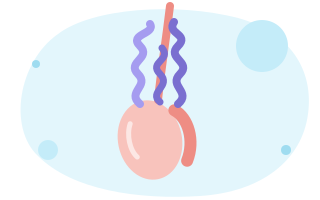
- Swollen, twisted veins above the testis that feel like a soft "bag of worms"
- One testis smaller than the other
- A varicocele found during tests for infertility
- In teenagers, a swelling in the scrotum noticed by the boy or a parent
What is a varicocele?
Veins carry blood back from the testis. When the small valves inside them do not work well, blood pools and the veins stretch, much like varicose veins in the legs. A varicocele is common, often harmless, and in many men causes no symptoms at all.
Why varicoceles happen, and the grades
Most varicoceles appear in the teenage years and are on the left side, because the left testicular vein joins another vein at a sharp angle, which makes it easier for blood to pool. They are not caused by exercise or sexual activity.
Doctors grade a varicocele by how easily it can be found:
- Grade 1: felt only when you bear down while standing
- Grade 2: felt while standing, without bearing down
- Grade 3: large enough to be seen through the skin
A varicocele seen only on ultrasound, and not felt on examination, usually does not need treatment.
What happens at your visit to the clinic
- The doctor asks about the ache, how long you have had it, and whether you and your partner are trying for a baby.
- He examines the scrotum while you stand and while you lie down, and may ask you to bear down. This is done in private.
- He checks the size and feel of both testes.
- He explains whether treatment is needed now, or whether a check-up later is enough.
Tests the doctor may advise
- Colour Doppler ultrasound of the scrotum, to confirm the varicocele and measure the testes
- Semen analysis, if fertility is a concern
- Hormone blood tests in some men
The doctor will tell you which of these tests you need and where each one can be done.
Treatment options after evaluation
- Watching and checking if the varicocele causes no trouble, the testes are normal and fertility is not a concern.
- Supportive underwear and pain relief for a mild ache.
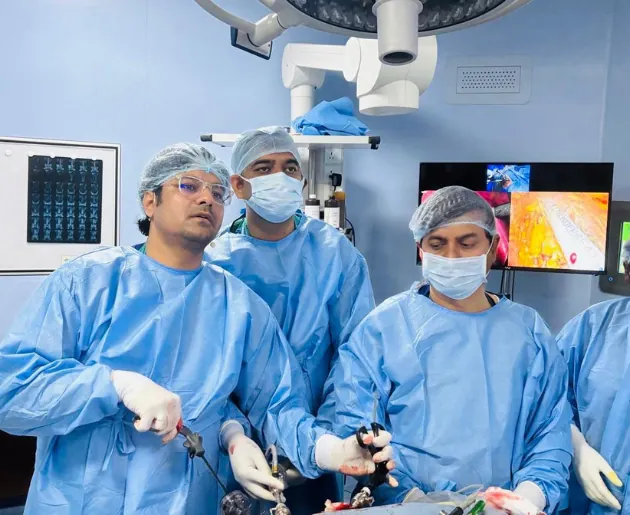
- Varicocele surgery (varicocelectomy), in which the swollen veins are tied off so blood flows through healthy veins instead. It is often done through a small cut in the groin, sometimes with a microscope, or by keyhole surgery.
- Embolisation, in which the vein is blocked from inside using a thin tube passed through a blood vessel, in selected cases.
The doctor will explain which method he advises for you, what recovery involves, and when you can go back to work and exercise.
When surgery is worth considering
- A dull ache that affects work or daily life and has not settled with supportive underwear and pain relief
- A couple trying for a baby, with an abnormal semen report and a varicocele that can be felt
- A teenager whose testis on the varicocele side is smaller or not growing
The procedure and recovery
Varicocele surgery is usually done in hospital as a day-care or overnight procedure. In the microsurgical method, the swollen veins are tied off through a small cut in the groin, while the artery and lymph vessels of the testis are kept safe under the microscope.
- Most men walk the same day and return to desk work within a few days
- Heavy lifting, gym work and sport are usually avoided for two to four weeks
- Supportive underwear and a few days of pain relief help with the soreness
- If fertility was the reason, a semen analysis is repeated three to six months later
- Problems such as fluid around the testis or the varicocele returning are uncommon; the doctor explains them before you decide
When not to wait
Sudden, severe pain in a testicle, especially with swelling, nausea or vomiting, can be a twisted testis (torsion). Go to the nearest emergency department at once; it needs treatment within hours.
A new varicocele on the right side, or one that does not go down when you lie flat, should be checked soon, because it is sometimes caused by something pressing on the veins higher up.
Related: male infertility and chronic testicular pain.