

Why the man's test matters
In roughly half of couples who have difficulty conceiving, a male factor plays a part, either alone or together with a female factor. The semen test is simple, quick and does not hurt, so doctors advise doing it early, at the same time as the woman's tests, rather than after months of treatment for her alone.
How to give a good sample
- Abstain for two to five days before the test, or as the lab advises.
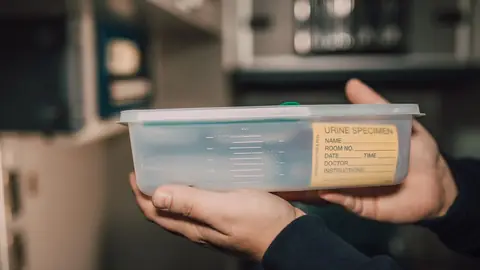
- Collect the whole sample by masturbation into the sterile container the lab gives you. If some of it is lost, tell the lab, because the first part carries most of the sperm.
- Do not use lubricants, saliva or an ordinary condom; they can damage sperm.
- Reach the lab within about an hour if you collect at home, keeping the container close to your body, not in a cold car or a hot bag.
- Tell the lab about any recent fever, illness or new medicine. A fever in the last three months can lower the numbers for a while.
Reading the report, line by line
Most labs in Lucknow compare your results with the World Health Organization (WHO) reference values. The 2021 WHO figures below are the lower limits seen in men who had recently fathered a child. They are a guide, not a pass or fail line, and some labs still print the older 2010 values, which are slightly different.
- Volume: about 1.4 mL or more. Very low volume can mean an incomplete sample, a blockage or a problem with ejaculation.
- Sperm concentration (count): 16 million per mL or more.
- Total sperm number: 39 million or more in the whole sample.
- Total motility: 42 percent or more of sperm moving.
- Progressive motility: 30 percent or more moving forward. This is the line many doctors look at first.
- Vitality: 54 percent or more alive, checked when few sperm are moving.
- Normal forms (morphology): 4 percent or more. Most sperm look abnormal even in fertile men, so a low-looking figure here is common.
- pH, liquefaction and viscosity: how the sample behaves after collection. Abnormal values can point to infection or a blockage.
- Pus cells (white cells): a high number can suggest infection or inflammation, and may need a culture.
The medical words on the report
- Normozoospermia: all main values within the reference range
- Oligozoospermia: fewer sperm than the reference value
- Asthenozoospermia: fewer moving sperm than expected
- Teratozoospermia: fewer normally shaped sperm than expected
- Azoospermia: no sperm seen, even after the sample is spun down; this always needs a urologist
- Leukocytospermia: more white cells than expected
Reports often combine these, for example "oligoasthenozoospermia", which simply means both the count and the movement are lower than the reference values.
One report is not the final answer
Sperm take about two and a half to three months to develop. A report reflects how you were in the weeks before, including any fever, heavy drinking or long hours in heat. That is why an abnormal result is usually repeated, often after a few weeks, before anyone decides what it means. Two similar reports give a much clearer picture than one.
Common reasons for low numbers
- A varicocele, swollen veins above the testis that warm it
- Heat: hot baths, a laptop on the lap, tight underwear, long hours of driving or sitting near furnaces
- Smoking, gutka, heavy alcohol use and being overweight
- Diabetes and some long-term medicines
- Testosterone injections or anabolic steroids used for bodybuilding
- Infection of the prostate or epididymis
- Hormone problems, a blockage in the sperm tubes, or a genetic cause, especially when no sperm are seen
What a urologist does next
- Asks about your health, past illnesses such as mumps, operations, medicines, work and habits.
- Examines the testes and scrotum in private, checking their size and looking for a varicocele or a missing sperm tube.
- Reviews your reports and, if needed, advises hormone tests (FSH, LH, testosterone, prolactin), a scrotal ultrasound or a repeat semen test.
- Explains the likely cause and the options, from lifestyle changes and medicines to an operation for a varicocele or, in some men, sperm retrieval combined with IVF at a fertility centre.
Read more on our page on male infertility treatment in Gomti Nagar Extension.
Things you can start now
- Stop smoking and gutka, and keep alcohol low
- Move towards a healthy weight with regular exercise
- Keep the testes cool: loose underwear, no laptop on the lap, breaks from long sitting
- Keep blood sugar under control if you have diabetes
- Do not start testosterone or "muscle" supplements without a doctor
- Have sex every two to three days through the cycle, rather than only on chosen days
Fertility care in Gomti Nagar Extension
Swastik Urology Clinic is in Sector-5, Gomti Nagar Extension, near Sadar Tehsil, a short ride from Gomti Nagar, Shaheed Path and Chinhat. Dr. Aditya P.S. Sengar (MBBS, MS (General Surgery), DNB (Urology)) sees men and couples in the morning OPD, Monday to Saturday, 9:30 AM to 11:30 AM, and speaks Hindi, English, Bhojpuri and Gujarati. Bring all your semen reports, oldest first. Request an appointment.
This article gives general information and does not replace examination, diagnosis or treatment by a qualified doctor.